
Support student wellbeing, reduce classroom disruptions, and create more inclusive learning environments with medical-grade multi-sensory equipment designed for Canadian K–12 schools. AHS provides durable, safe, and evidence-informed sensory products trusted by educators, learning support teams, OTs/PTs, and school administrators across Canada.

Multi-sensory therapy—also referred to as sensory regulation, Snoezelen®-inspired spaces, or multi-sensory environments (MSE)—gives students a calm, predictable environment to practice self-regulation. School-based occupational therapy teams in Canada describe sensory rooms as controlled spaces that use light, sound, touch and movement to support regulation, behaviour and learning for neurodivergent students.¹
Schools use these tools to support students with autism spectrum disorder (ASD), ADHD, sensory processing differences, anxiety, trauma backgrounds, and emotional regulation needs. Canadian guidance for ASD in education notes that multi-sensory environments are widely used in schools across several provinces, even though the research base is still emerging and interventions should be embedded within evidence-based educational plans.²
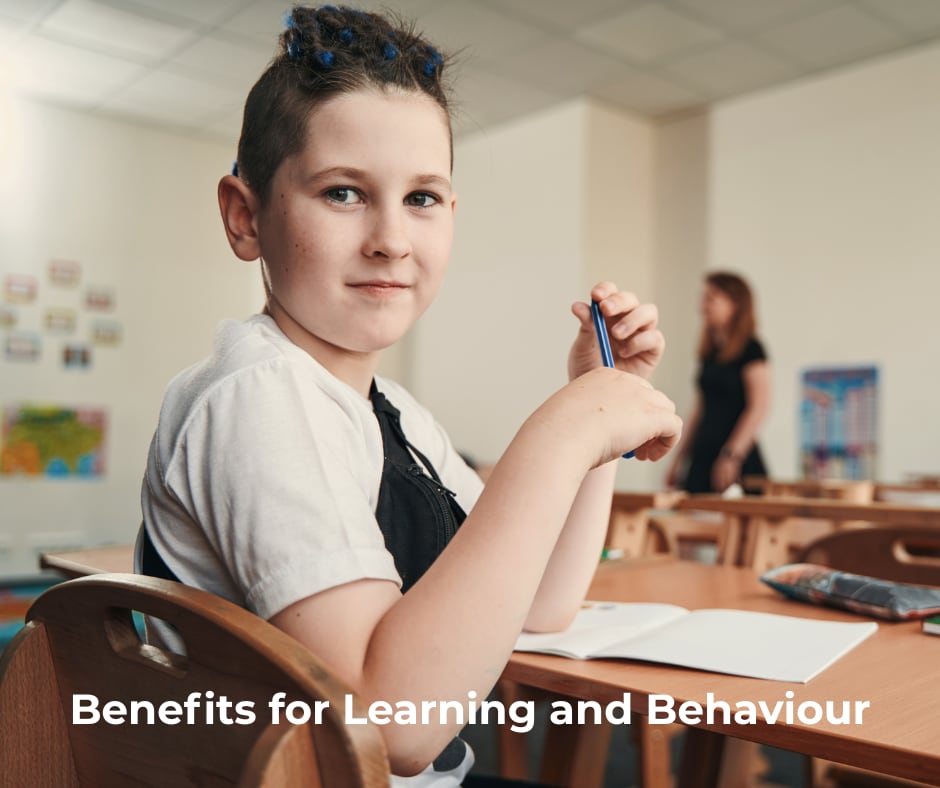
Transitions (arrival, recess, class changes) are common moments when students experience sensory overload. Multi-sensory environments provide consistent visual, tactile, and auditory cues that help students regulate before behaviours escalate. Canadian studies show that predictable sensory input can decrease agitation, reduce stress behaviours, and support smoother transitions—especially for students with autism, ADHD, and sensory processing differences.
When students have access to controlled sensory input, they are better able to sustain attention, participate in communication activities, and engage with learning tasks. Research involving autistic children demonstrates that multi-sensory spaces—particularly ones where students can control sensory elements—lead to fewer repetitive behaviours and more on-task engagement. This creates a more focused learning environment for both the student and the classroom team supporting them.
Self-regulation and emotional awareness are core areas of many IEPs and inclusive education plans. Multi-sensory environments offer a structured space to practise identifying emotions, calming the body, and returning to a learning-ready state. Canadian OT reviews emphasize that these environments can complement school-based interventions by offering a predictable, low-stimulation setting where students can rehearse self-regulation strategies mapped to their IEP goals.
Sensory rooms and calming corners give students a designated space to reset without disrupting the classroom. When learners are able to step away and regulate safely, teachers report improved classroom flow, fewer interruptions, and smoother teaching transitions. These safe spaces help prevent escalation and provide students with a sense of agency and predictability—critical elements of trauma-informed practice.
Multi-sensory environments are frequently used as a non-pharmacological calming strategy in both schools and pediatric clinical settings. Evidence from Canadian pediatric reviews and ASD sensory studies shows that controlled lighting, gentle movement, and soft tactile input can reduce anxiety, calm heightened states, and support smoother re-entry after behavioural incidents. These tools help staff stabilize students without physical restraint or medication, aligning with best practices in safety and student wellbeing.
AHS is Canada’s leader in medical-grade multi-sensory solutions—built for the daily demands of educational environments. Schools rely on our products because they are:
Durable and Canadian-made with HDPE medical-grade materials
Built with CSA-approved electrical components
Easy to clean and maintain for high-traffic student areas
Designed for mobility, making sensory support accessible anywhere
Supported by our Canada-wide Territory Managers who are product experts
We help schools create effective sensory plans for counselling teams, inclusive education departments, behaviour specialists, and occupational therapy programs.
Schools implement AHS multi-sensory products for:
Regulation stations within inclusive classrooms
Quiet rooms for counselling and behavioural support
Transitions (arrival, recess, after lunch)
De-escalation support during high-stress moments
Sensory rooms built for long-term learning and therapeutic use
AHS supports all Canadian school districts with:
Fast quotes and product recommendations
School district approved vendor
Consultative services available by product experts
Support for capital projects, accessibility plans, and inclusive education budgets
Canada-wide delivery, training, and assembly (in select locations, where required)

1. Grandview Kids School-Years OT Team. Sensory Spaces, Places and Tools in School-Based Occupational Therapy: Exploring the Literature. Durham Region, Ontario, Canada; 2025. This Canadian OT literature review (12 peer-reviewed studies, 2000–2025) describes how elementary-school sensory rooms are used to support regulation, participation and classroom behaviour, while also highlighting that best-practice guidelines and strong outcome evidence are still limited. grandviewkids.ca
2. Interprovincial Autism Advisory Committee (Autism in Education). Sensory Differences and Autism Spectrum Disorder: Issue Paper. Canada; 2013. This Canadian issue paper summarizes systematic reviews of sensory-based interventions (including multi-sensory environments/Snoezelen rooms) and concludes that evidence for correcting underlying sensory problems or improving core ASD symptoms is limited; it recommends that schools integrate any sensory approaches within evidence-based educational and behavioural programs. studentservices.ednet.ns.ca
3. Klages K, Zecevic A, Orange JB, Hobson S. Potential of Snoezelen room multisensory stimulation to improve balance in individuals with dementia: a feasibility randomized controlled trial. Clinical Rehabilitation. 2011;25(7):607–616. [Canadian LTC study] Conducted in a Canadian long-term care home, this RCT used a Snoezelen room twice weekly for 6 weeks. While balance outcomes did not significantly change, observational data highlighted reductions in agitation and the potential of tailored multisensory input to calm and engage residents. PubMed
4. Unwin KL, et al. The use of Multi-Sensory Environments with autistic children: Exploring the effect of having control of sensory changes. Autism. 2022;26(6):1379–1394. This experimental study with 41 autistic children (aged 4–12) found that sessions in a multi-sensory room where children controlled the sensory changes were associated with fewer repetitive motor and sensory-seeking behaviours, plus increased on-task attention, compared with a passive condition—supporting your bullets on focus, engagement and reduced escalation. PMC
5. De Domenico C, et al. Exploring the usefulness of a multi-sensory environment on sensory behaviors in children with autism spectrum disorder. Journal of Clinical Medicine. 2024;13(14):4162. This clinical study reported improvements in sensory behaviour scores for children with ASD following exposure to an MSE program, suggesting a role for structured sensory environments in supporting regulation and participation (though not school-specific). PMC
6. CADTH (Canadian Agency for Drugs and Technologies in Health). Sensory Rooms for Pediatric Patients: Clinical Evidence and Guidelines. Rapid Response Report; 2016. This Canadian evidence review of Snoezelen/sensory rooms in pediatric hospital settings found some studies reporting reductions in anxiety and distress (e.g., in children with severe brain injury or undergoing procedures), supporting the idea of MSEs as non-pharmacological calming options while also noting the small and heterogeneous evidence base. CDA AMC
7. Baker M. Multi-Sensory Environments: A Qualitative Exploration. [Doctoral thesis]. Library and Archives Canada; 2019. [Canadian thesis] This qualitative Canadian thesis (hosted on the federal Library and Archives site) explores how multi-sensory environments are experienced by users and staff, highlighting perceived benefits in relaxation, enjoyment, communication and coping—consistent with your emphasis on emotional regulation and engagement. OCLC Digital Archive
Snoezelen® is a registered trademark of Rompa Limited.